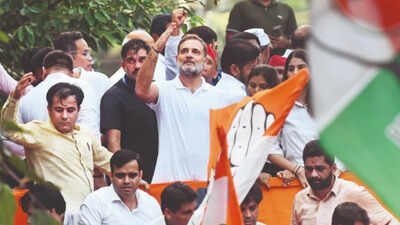
PABITRA BANERJEE: The Chamber of Trade and Industry (CTI) has written to Congress leader and Leader of Opposition in the Lok Sabha, Rahul Gandhi, urging him to postpone the opposition INDIA bloc’s scheduled November 1 rally at Ramlila Maidan until after November 10. Highlighting that the business community in the national capital has “already suffered losses” due to frequent protests, political marches, and road closures across central Delhi, the traders’ body warned that a massive political congregation during peak festive shopping could put ₹10,000 crore in Diwali trade at severe risk.In its representation, CTI Chairman Brijesh Goyal pointed out: “According to CTI’s estimates, traders in Delhi have already suffered losses of approximately Rs 3,000 crore due to repeated rallies, marches and road closures in Connaught Place, India Gate and central Delhi.””The movement of goods into wholesale markets had come to a halt, while retail customers were unable to reach the markets,” he added.Around 20 major wholesale and retail markets fall within a five-kilometre radius of Ramlila Maidan. Key commercial hubs including Chandni Chowk, Sadar Bazar, Khari Baoli, Chawri Bazar, Bhagirath Palace, and Karol Bagh—which supply essential goods across the entire country—face potential complete standstills due to traffic diversions, heavy barricading, and metro restrictions. The trade body stressed that the proximity of Old Delhi and New Delhi railway stations means incoming regional buyers and festive shoppers will face severe transit hurdles.While acknowledging political parties’ right to peaceful protest and democratic expression, CTI appealed to the INDIA bloc to keep key commercial districts clear during the crucial run-up to Dhanteras and Diwali. The opposition’s planned rally aims to intensify political pressure over alleged electoral roll revision anomalies and demand the resignation of the Chief Election Commissioner. Postponing the event until after the festival period, the traders’ body noted, would safeguard the livelihoods of thousands of small merchants relying on peak seasonal revenue.

Traders in Delhi request opposition leaders to postpone agitation till Nov 10 to avoid severe losses during Diwali
Chamber of Trade and Industry warns INDIA bloc’s November 1 Ramlila Maidan rally could endanger ₹10,000 crore in Diwali festive trade across 20 key wholesale and retail hubs.
 By Subrata Das