



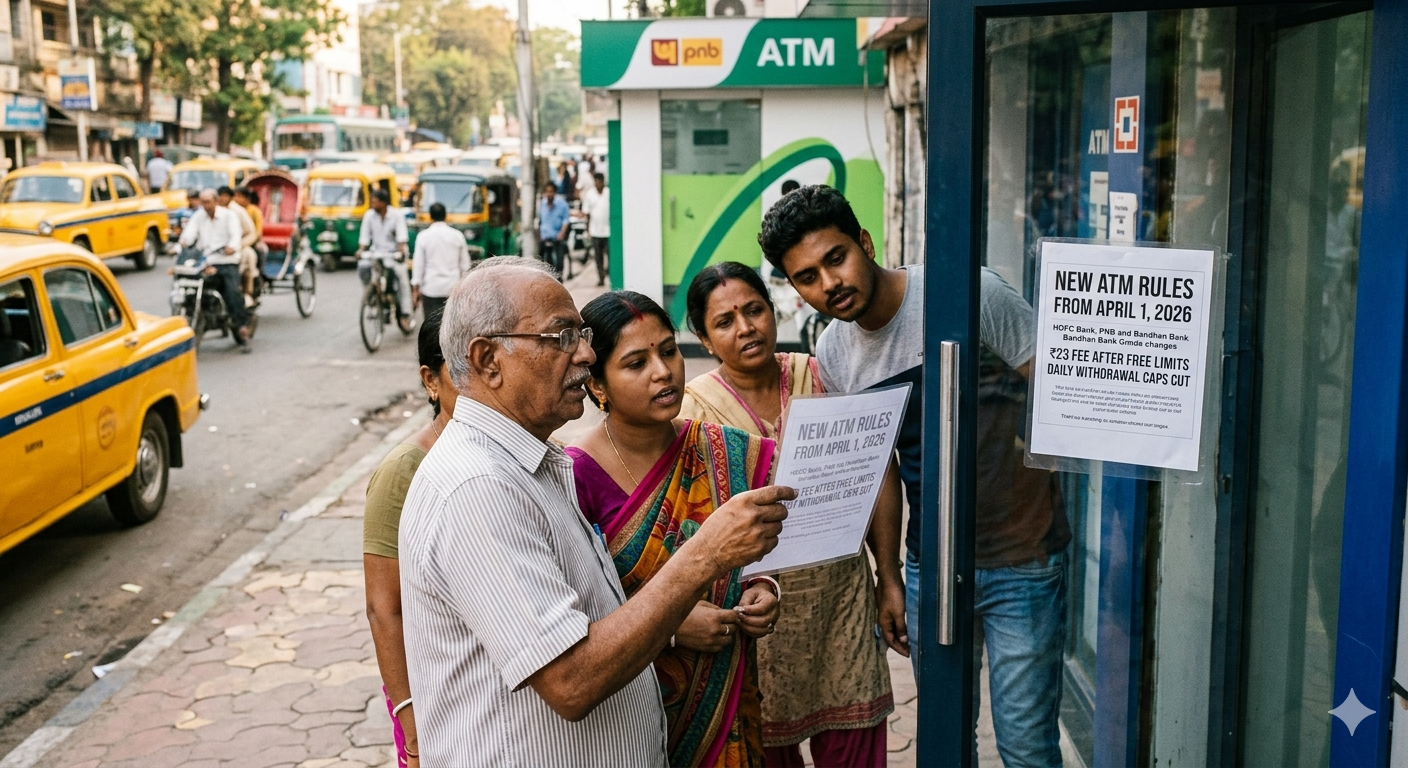
Banking habits across India are set for a shift as several major lenders, including HDFC Bank, Punjab National Bank, and Bandhan Bank, rollout updated ATM transaction rules starting April 1, 2026.
These changes, which follow the latest Reserve Bank of India framework, will primarily affect how free monthly limits are calculated and how much you pay once those limits are exhausted.
For many, the most significant adjustment will be the inclusion of UPI-based cardless withdrawals into the standard free transaction quota, meaning those quick QR-code cash-outs will now count toward your monthly allowance just like a physical card swipe.The cost of convenience is also seeing a slight uptick.
Most banks are increasing the service fee for transactions made beyond the free limit to ₹23 per financial transaction, up from the previous ₹21 cap. Non-financial requests, such as checking your balance or getting a mini-statement, will now cost between ₹10 and ₹11 at many branches. Furthermore, some banks are introducing stricter penalties for failed attempts; for instance, Bandhan Bank will now charge ₹25 if a transaction is declined specifically due to insufficient funds in the account.
Beyond the fees, certain banks are drastically tightening their daily security and withdrawal caps.
Punjab National Bank has announced it will slash the daily withdrawal limits for several card variants by half. High-end cards that previously allowed a ₹1 lakh daily limit will be capped at ₹50,000, while premium variants like Visa Signature will see a drop from ₹1.5 lakh to ₹75,000.
As these new regulations take effect, customers in busy hubs like Kolkata—where the limit for “other-bank” ATMs remains at three free uses—will need to plan their cash needs more carefully to avoid these accumulating surcharges.
While these changes aim to help banks manage the rising costs of maintaining physical ATM networks, they place a new premium on cash access.
For the average consumer, the best strategy moving forward will be to consolidate withdrawals into fewer, larger transactions and stay mindful of the specific free limits of their own bank to avoid unnecessary “convenience” fees.

