



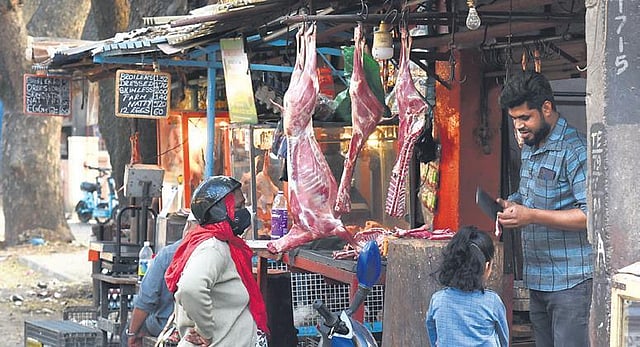
The Bihar government has introduced a statewide ban on the open sale of meat, just days before Ramadan, allowing only licensed traders to operate under stringent regulations.
Deputy Chief Minister Vijay Kumar Sinha announced the decision on February 16, emphasizing that roadside or open-space meat vending will no longer be permitted. Violators will face strict action.
Sinha clarified in the Legislative Council that a valid licence is now mandatory for all meat sellers. “Only licensed traders can conduct business as per the rules. Open sale of meat anywhere in the state is prohibited,” he stated. Official directives have been issued to all district administrations and municipal bodies for rigorous enforcement.
The move follows complaints from residents, particularly highlighted during a public dialogue in Darbhanga, where some claimed roadside meat shops deterred people from using certain routes. The government cites the policy as essential for public cleanliness, health, hygiene, and maintaining social order. Meat shops must now use curtains or dark glass to conceal meat from public view, with enhanced monitoring by local authorities.
Action has already begun in places like Darbhanga, where open sales have been halted.
The timing, coinciding with the approach of Ramadan—a period of heightened demand for meat—has sparked widespread concern among the minority Muslim community. Many small-scale traders, who rely on these businesses for their livelihood, fear severe economic hardship.
A Patna-based meat seller, speaking anonymously, said, “We accept rules and will apply for licences, but the government should provide time and assistance. Small vendors lack resources for sudden changes.”
Others worry about the impact on families during the holy month and question whether the order will curb alleged vigilante harassment. Opposition voices have raised similar doubts, asking if it truly addresses past issues of intimidation.
Bihar’s policy mirrors restrictions in states like Uttar Pradesh, where open display of meat is banned, and shops must use dark glass or heavy curtains.
The government insists the measure focuses on regulation—not prohibition—while avoiding hurt to any religious or social sentiments. However, community leaders stress that fair, non-discriminatory implementation is key. They call for trader consultations, simplified licensing, and protection from harassment.
As Ramadan nears, the real test lies in how authorities enforce the rules on the ground and whether the concerns of small traders are adequately addressed.

