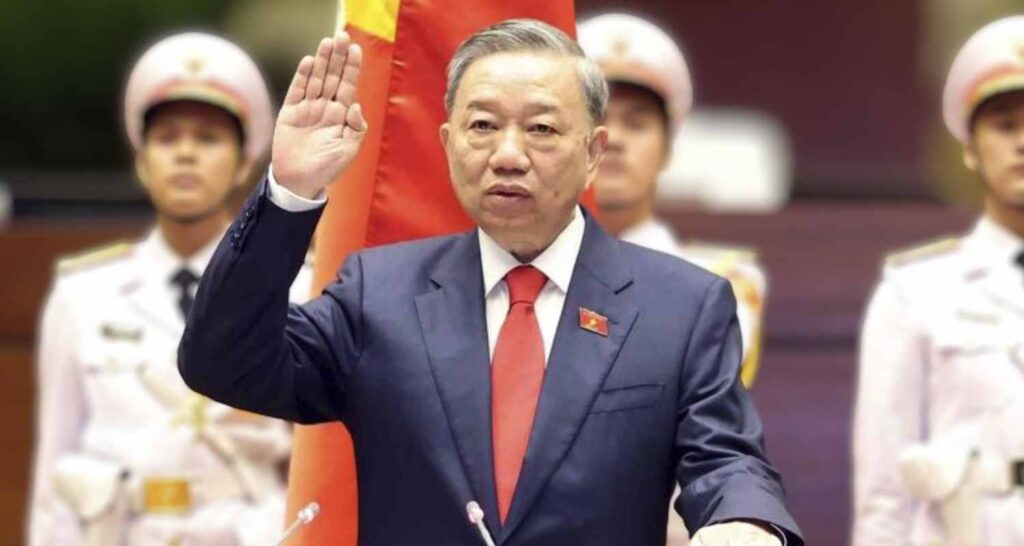
In a significant political development, Vietnam’s National Assembly has unanimously elected To Lam as the country’s new President, signalling a major consolidation of power within the ruling Communist Party.
Lam, who already serves as the General Secretary of the Communist Party of Vietnam, now holds two of the nation’s most powerful positions simultaneously. This dual role represents a notable shift from Vietnam’s long-standing governance model, which traditionally emphasized collective leadership and a balance of authority among top officials.
A former Minister of Public Security, Lam is widely known for his influential role in the country’s extensive anti-corruption campaign. The drive has led to the resignation, dismissal, and prosecution of several high-ranking officials, reshaping Vietnam’s political landscape in recent years.
His elevation to the presidency comes amid a period of political transition and instability, marked by frequent leadership changes. The previous president stepped down earlier this year as part of a broader reshuffle within the government.
Alongside Lam’s appointment, the National Assembly has also approved new key leadership positions, indicating a wider restructuring at the highest levels of governance. Analysts believe this consolidation of power could lead to more decisive policymaking and administrative efficiency. However, it has also raised concerns about reduced institutional checks and the growing centralization of authority.
As a one-party socialist republic, Vietnam’s political system is tightly controlled by the Communist Party, which oversees all major state institutions. While elections are held, candidates are typically vetted by the party, ensuring continuity in leadership.
Observers suggest that Lam’s leadership could play a crucial role in shaping Vietnam’s future direction, particularly in maintaining economic growth and navigating complex geopolitical relationships in the Asia-Pacific region.