


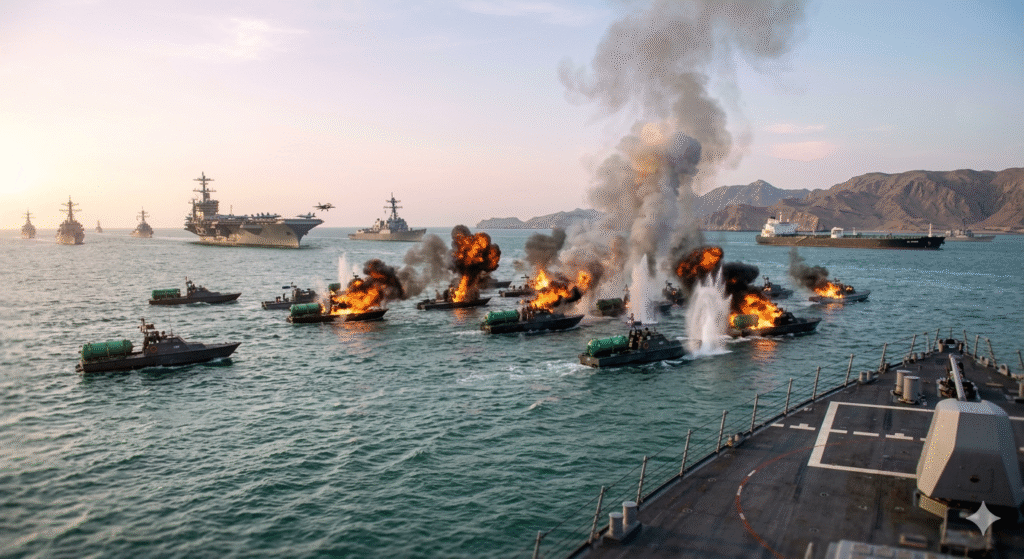
The U.S. military has escalated its maritime operations in the Middle East, announcing that it has “eliminated” 16 Iranian mine-laying vessels near the strategic Strait of Hormuz.
According to a statement from U.S. Central Command on March 10, 2026, the strike targeted several smaller crafts identified as being used to deploy naval mines in the shipping lanes.
The operation followed reports from U.S. intelligence that Iran was taking active steps to place explosives in the channel, which handles 20% of the world’s oil.
The U.S. military released unclassified footage of the engagement, confirming that the vessels were destroyed before they could successfully obstruct the waterway.
This military action comes amid a series of direct warnings from President Donald Trump, who used social media to threaten Iran with “consequences at a level never seen before” if the Strait was mined.
While Trump initially posted that there were no confirmed reports of mines being laid, he demanded the immediate removal of any such explosives and vowed that the U.S. would use advanced technology—similar to that used against drug traffickers—to “permanently eliminate” any boat attempting to block the passage.
In a separate post, he warned that the U.S. would respond “twenty times harder” to any Iranian attempt to halt the global flow of oil.
Despite the U.S. claims of victory in this specific maritime skirmish, the regional situation remains extremely tense. Iran has rejected the U.S. narrative, calling the air campaign “Epic Fury” an “Epic Mistake” and vowing that no Gulf oil would be shipped to its enemies.
The Islamic Republic has threatened to block “every single liter” of oil exports if its own capabilities are crippled.
With global oil prices surging and international airlines imposing heavy fuel surcharges, the 12th day of the conflict shows no signs of de-escalation as both sides continue to sharpen their rhetoric and military posturing.

