


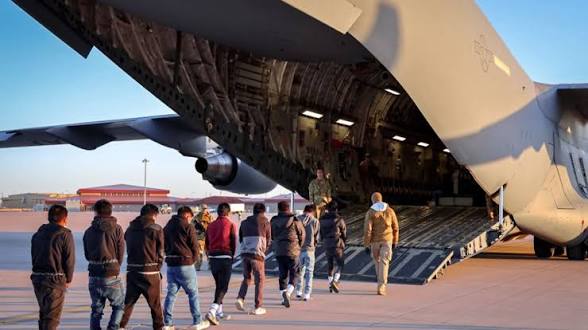
The United States has begun implementing a controversial third-country deportation program, with a flight carrying around 20 migrants from countries including Afghanistan and Iran arriving in the Central African Republic (CAR).
The flight departed from Louisiana on Thursday night, June 11, 2026, making a stop in Accra, Ghana, before reaching Bangui, the capital of CAR. Among those deported was an Iranian pro-democracy activist who had previously fled political persecution in her home country.
Human rights groups and immigration advocates have strongly criticized the move, arguing that the migrants have no cultural, linguistic, or family connections to the Central African Republic, a nation that continues to face significant political and security challenges.
The deportations are being carried out under a series of little-publicized agreements between the Trump administration and several third countries, including Ghana, Eswatini, and the Central African Republic. According to US officials, these arrangements allow the government to remove individuals who cannot legally be sent back to their countries of origin. Several migrants on the flight, including the Iranian activist, had previously been granted “withholding of removal,” a legal protection issued by immigration courts when individuals are found likely to face persecution, torture, or death if returned home.
The administration maintains that relocating them to a third country complies with existing legal restrictions on direct deportations.The policy has sparked strong opposition from immigration lawyers and advocacy organizations, including the Iranian American Legal Defense Fund (IALDF). Critics argue that sending vulnerable migrants to a country struggling with instability and poverty places them at serious risk. Some legal experts also warn that weak administrative systems in CAR could leave deportees vulnerable to exploitation, forced displacement, or eventual return to the countries they originally fled.
While the Department of Homeland Security insists that all affected individuals received due process, reports indicate that hundreds more migrants could be transferred to the Central African Republic under the program in the coming months.

