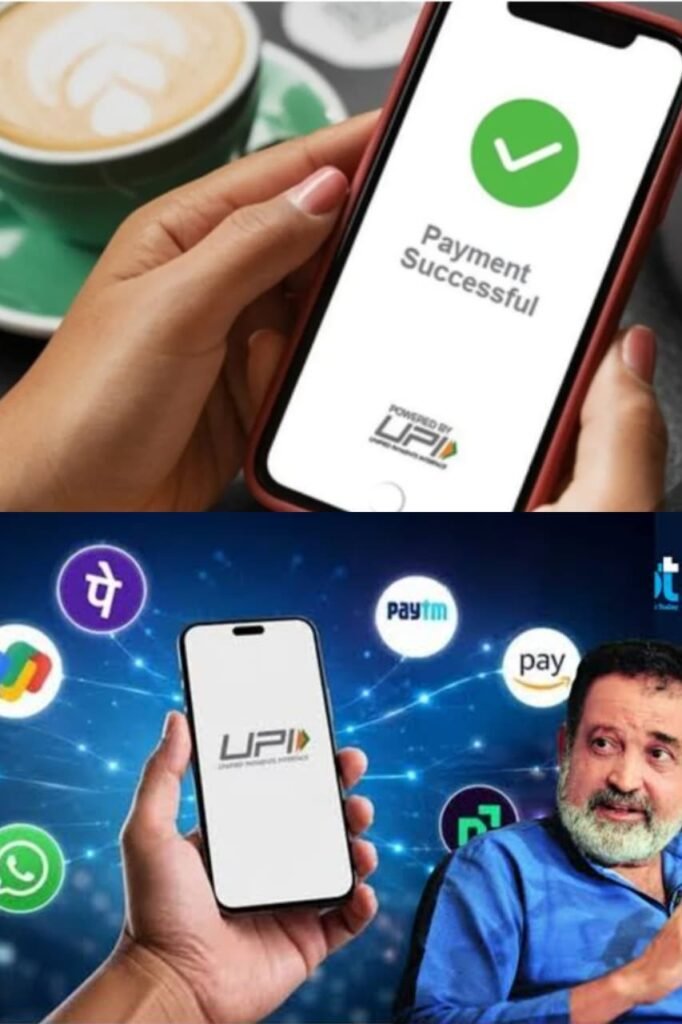
India’s digital payment ecosystem is set for a structural shift as the National Payments Corporation of India (NPCI) and the Reserve Bank of India (RBI) introduce a Merchant Discount Rate (MDR) on select UPI payments starting October 15, 2026. The move ends nearly six years of fully free UPI merchant processing, triggering intense debate between banking institutions and retail associations.
Here is an extensive breakdown of the new policy, who bears the cost, and how consumers and merchants are affected.
1. The Genesis: What is UPI and How Big Has It Grown?
- Definition: Unified Payments Interface (UPI) is an instant, real-time payment architecture developed by the National Payments Corporation of India (NPCI). It allows peer-to-peer (P2P) and person-to-merchant (P2M) fund transfers across any two bank accounts using a mobile smartphone interface.
- Launch: UPI was officially unveiled as a pilot program on April 11, 2016, under the stewardship of then-RBI Governor Raghuram Rajan and NPCI leadership in Mumbai.
- Volume & Scale: UPI has become India’s dominant retail payment backbone. In August 2026 alone, the platform processed a historic 24.51 billion transactions valued at ₹29.82 trillion, illustrating its indispensable role in the everyday economy.

2. The New Rule: 0.4% MDR on Select P2M Payments
Starting October 15, 2026, an MDR framework of 0.4% will apply strictly to eligible Person-to-Merchant (P2M) transactions exceeding ₹2,000.
- Who Pays: The MDR is charged directly to the merchant’s acquiring bank account. It is not a fee on the buyer or consumer.
- Maximum Cap: The deduction is capped at ₹300 per transaction for ticket sizes of ₹75,000 and above.
- Concessional Categories: Transactions above ₹2,000 in essential public services and low-margin sectors (such as fuel, railways, insurance, municipal utilities, PNG, and telecom) will attract a flat fee of ₹5 per transaction instead of 0.4%. Capital market investments (mutual funds, broking) attract an MDR of 0.02% (capped at ₹300).
3. Why Was It Introduced?
For years, commercial banks, payment aggregators, and fintech apps bore the cost of running UPI infrastructure without a dedicated revenue stream from zero-MDR rules. The collected MDR will be distributed across the ecosystem—split among acquiring banks, issuing banks, payment service providers (PSPs), and third-party UPI applications—to fund:
- High-capacity server and networking resiliency.
- Advanced cybersecurity protocols and anti-fraud monitoring systems.
- Upgraded dispute resolution and customer grievance redressal mechanisms.
Union Finance Minister Nirmala Sitharaman clarified that this is an operational decision taken by the payment ecosystem rather than a government tax or external pressure, designed to build a self-sustaining digital architecture.
4. What Remains Completely Free?
- All Person-to-Person (P2P) Transfers: Sending money to friends, family, splitting bills, or paying domestic staff remains 100% free regardless of the amount transferred.
- 96% of Everyday Merchant Payments: All merchant transactions up to and including ₹2,000 carry zero MDR. Because over 96% of everyday P2M payments fall under this threshold, daily grocery runs, local transport, and small dining bills remain unaffected.
- Small Merchants (Under ₹1 Lakh/Month): Micro-merchants and street vendors receiving up to ₹1,00,000 per month via static QR codes are designated as P2PM vendors and remain exempt from MDR charges.
- RuPay Debit Cards: RuPay-powered debit transactions retain statutory zero-MDR protection.
5. Consumer Impact: Does the MRP Change?
- No Price Surcharges: The Maximum Retail Price (MRP) or billing total will remain unchanged whether a customer pays via cash, debit card, credit card, or UPI.
- Regulatory Shield: The RBI and NPCI have barred merchants from passing MDR surcharges onto buyers. UPI applications are also prohibited from introducing customer-facing platform fees or convenience levies.
6. Why Retailers Are Protesting: The “No UPI Day” Call
Despite assurances, organized merchant bodies have expressed severe discontent over margin compression:
- Margin Squeeze on High-Value Goods: The All India Mobile Retailers Association (AIMRA) announced that brick-and-mortar mobile phone retailers will observe October 2 as “No UPI Day”, symbolically covering QR codes with black cloth.
- The Math: Because mobile phones and electronics routinely cost well over ₹2,000 and operate on tight margins (often 2% to 3%), a small store processing ₹5 lakh to ₹30 lakh monthly via UPI could suffer a direct net monthly erosion of ₹2,000 to ₹12,000. Across the country, the association estimates an annual burden exceeding ₹500 crore on gadget retailers.