


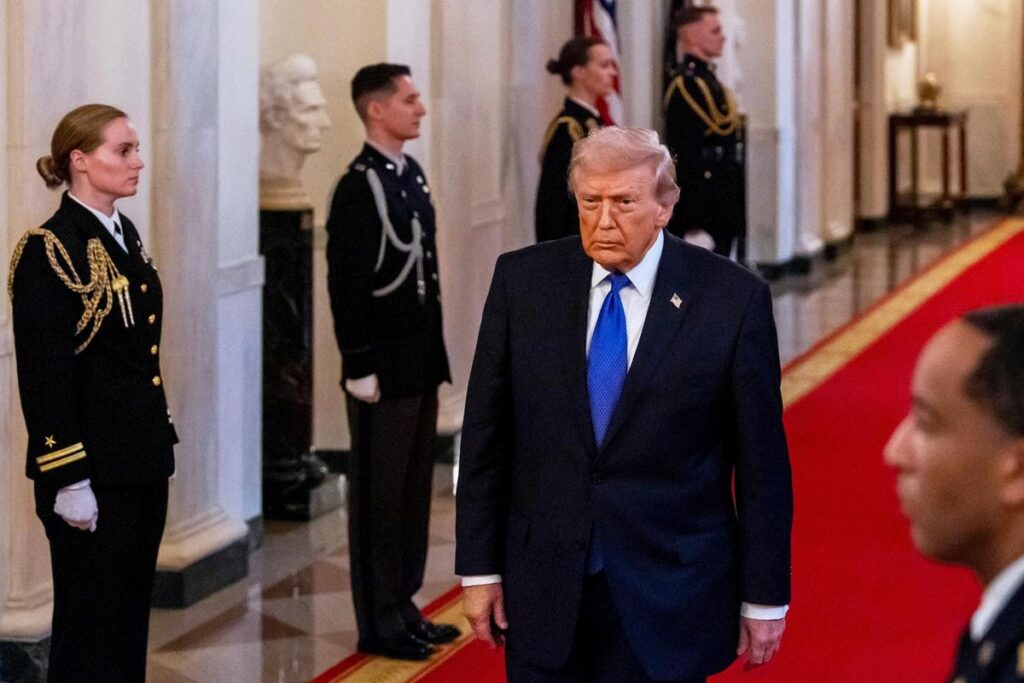
President Donald Trump has cautioned that the ongoing military conflict with Iran could extend well beyond the initial one-month estimate, even as he claimed the campaign is currently running “substantially” ahead of schedule.
The war, which began on February 28, 2025, following a strike that killed Iran’s Supreme Leader Ayatollah Ali Khamenei, has rapidly escalated into a broader regional crisis.
In a recent address from the White House, Trump noted that while the original projection was four to five weeks, the United States is fully prepared for a prolonged engagement.
He clarified the administration’s primary military objectives: neutralizing Iran’s missile capabilities, dismantling its navy, destroying its nuclear program, and severing its support for regional proxy groups.
Notably, Trump stopped short of calling for total regime change, focusing instead on stripping the Islamic Republic of its offensive power.
The conflict has already triggered widespread instability across the Middle East. Israel has intensified its bombardment of Lebanon, while Tehran has reportedly targeted oil infrastructure in Gulf nations. These developments led the U.S. to issue an urgent advisory for all American citizens to evacuate the region, from Egypt eastward.Domestically, the administration’s narrative has faced scrutiny. Secretary of State Marco Rubio stated that the U.S. only joined the offensive after learning that Israel was already prepared to strike Iran independently.
This claim has met with skepticism from Democratic lawmakers, who expressed concern over the U.S. being drawn into a major war based on another nation’s threat assessment.
As explosions continue to rock Tehran and fighter jets patrol the skies, the situation remains volatile.
While the White House suggests a willingness to negotiate with new Iranian leadership “eventually,” the immediate focus remains a high-intensity military campaign that threatens to reshape the geopolitical landscape of West Asia.

