


The All India Trinamool Congress (TMC), led by Chief Minister Mamata Banerjee, has faced a significant political setback in the 2026 West Bengal Assembly elections, as visible cracks emerged in its long-standing Muslim support base, reshaping the state’s electoral landscape. For over a decade, Muslim voters,who constitute nearly a third of the state’s population, had largely remained consolidated behind the TMC, playing a decisive role in its repeated electoral successes.
However, this time, that unity appeared to fracture, with votes splitting among several वपक्ष parties including the Indian National Congress, the Communist Party of India (Marxist), and the Indian Secular Front, along with smaller emerging groups such as the Aam Janata Unnayan Party led by Humayun Kabir. The impact of this fragmentation was most pronounced in minority-dominated districts like Murshidabad, Malda, and Uttar Dinajpur, where the TMC saw a sharp decline in its seat share compared to previous elections. Political observers note that a mix of local dissatisfaction, including concerns over representation, governance issues, and controversies related to Waqf properties and reservation classifications, contributed to the shift in voter sentiment, alongside a degree of anti-incumbency against the ruling party.
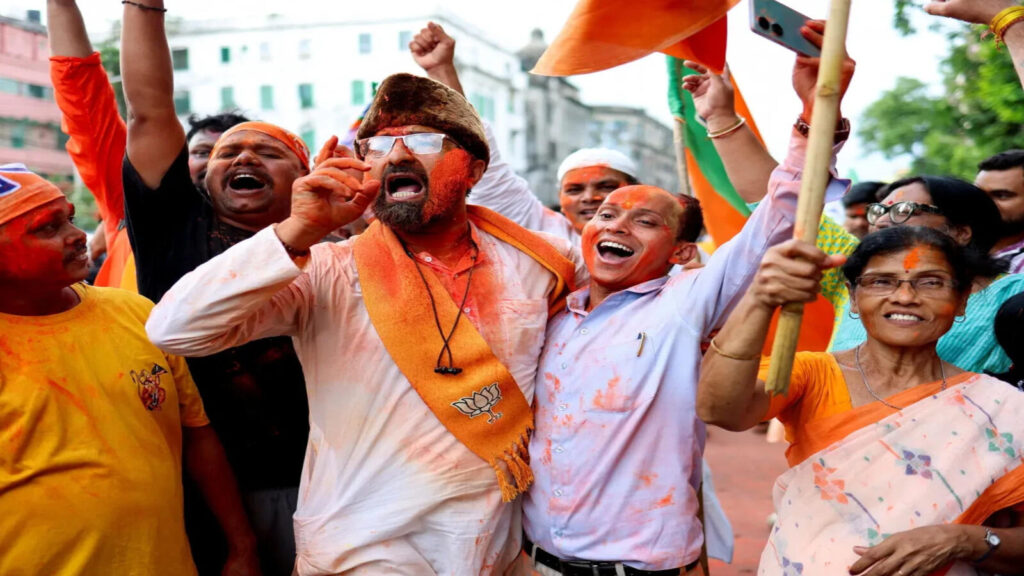
The Bharatiya Janata Party (BJP), led nationally by Narendra Modi, emerged as the principal beneficiary of this division, leveraging a consolidated Hindu vote base while the minority vote remained split across multiple parties, ultimately securing a decisive electoral victory with a commanding majority in the Assembly. The outcome marks a turning point in West Bengal politics, indicating that the once-reliable consolidation of Muslim voters behind the TMC can no longer be taken for granted, and highlighting how fragmentation within a key support base can significantly alter electoral outcomes without necessarily resulting in a direct shift of allegiance to a single rival party.

