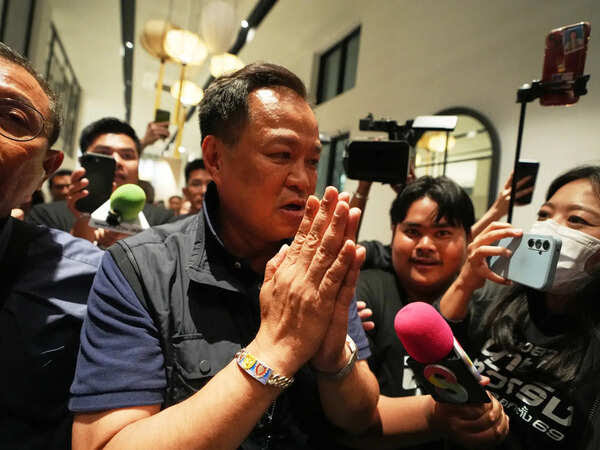
Thailand’s political equation shifted sharply on Sunday as Prime Minister Anutin Charnvirakul and his Bhumjaithai Party surged ahead in the general election, opening up a clear path to power and potentially ending months of uncertainty. With nearly 80 per cent of votes counted, the party has built a commanding lead that rivals are now struggling to close.
The snap poll, announced in mid-December, was widely seen as a strategic gamble. Analysts believe Anutin hoped to ride a wave of nationalist sentiment sparked by a recent border dispute with Cambodia. He has been in office for less than 100 days, stepping in after Paetongtarn Shinawatra of the Pheu Thai Party was removed from power.
So far, the numbers show Bhumjaithai ahead of both the reform-minded People’s Party and Pheu Thai. The People’s Party, which had topped several pre-election surveys with promises of structural reforms, has already begun tempering expectations. Its leader, Natthaphong Rueangpanyawut, acknowledged the tough road ahead and signalled the party is prepared to sit in opposition rather than join a Bhumjaithai-led alliance.
The vote wasn’t only about seats in parliament. Voters were also asked to weigh in on the country’s 2017 constitution. Early indications show strong backing roughly two to one for drafting a new charter. Critics have long argued that the current, military-backed constitution concentrates too much authority in unelected hands. If approved, the change would set off a drawn-out process of reforms and additional public votes.
For now, attention remains fixed on the final tally. Bhumjaithai’s lead suggests a clearer path to government, but whether that translates into lasting stability something both investors and ordinary citizens have been hoping for will depend on what comes next.
Thailand Election: Bhumjaithai Surges Ahead in Snap Poll