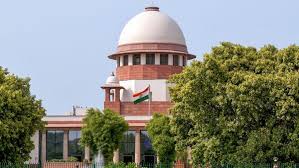
The Supreme Court has upheld the constitutional validity of the Election Commission of India’s (ECI) Special Intensive Revision (SIR) of electoral rolls, ruling that the poll body has the authority to carry out large-scale voter list verification exercises to ensure free and fair elections. At the same time, the apex court directed the ECI to provide adequate assistance and legal remedies to voters who may face exclusion during the process.
A Bench led by Chief Justice Surya Kant observed that the “integrity, accuracy and credibility” of electoral rolls form the foundation of democracy and that free and fair elections cannot rely only on polling procedures. The court held that the SIR exercise has a direct connection with the constitutional goal of maintaining clean and accurate voter rolls.
The judgment came while hearing petitions challenging the SIR process initiated in Bihar and later expanded to several other states, including West Bengal. Petitioners had argued that the revision exercise was arbitrary, exclusionary and could disenfranchise genuine voters by forcing them to repeatedly prove their eligibility.
Rejecting these arguments, the Supreme Court ruled that the ECI acted within its constitutional and statutory powers under Article 324 and the Representation of the People Act. The court clarified that the Commission has wide authority to revise electoral rolls and conduct verification drives when required.
Importantly, the court also held that the ECI can conduct a limited examination of a person’s citizenship status for the purpose of determining whether they are eligible to be included in the electoral roll. However, the judges clarified that such findings by the Election Commission would not be a final determination of citizenship under the law.
While endorsing the SIR exercise, the apex court stressed that no eligible voter should be unfairly excluded. It directed the ECI to create accessible mechanisms for appeals, adjudication and assistance to affected voters. The Commission has also been asked to forward cases involving doubtful citizenship to the competent authorities under the Citizenship Act for further examination.
The verdict has triggered political reactions across the spectrum. While the Election Commission welcomed the judgment as a validation of its constitutional role, opposition parties including Congress raised concerns that the ruling failed to address fears of disenfranchisement arising from the voter verification process.