


The Supreme Court of India on Monday directed the Election Commission (EC) to freeze the electoral rolls for the first phase of the West Bengal Assembly elections by midnight, rejecting the state government’s plea for an extension. The decision was made by a Bench led by Chief Justice Surya Kant to ensure the administrative timeline for the April 23 polling remains intact, despite nearly 20 lakh voters remaining excluded following a Special Intensive Revision (SIR) aimed at clearing “logical discrepancies.” The court emphasized that while aggrieved individuals may still approach 19 special appellate tribunals, a definitive “line must be drawn” to facilitate the election process.
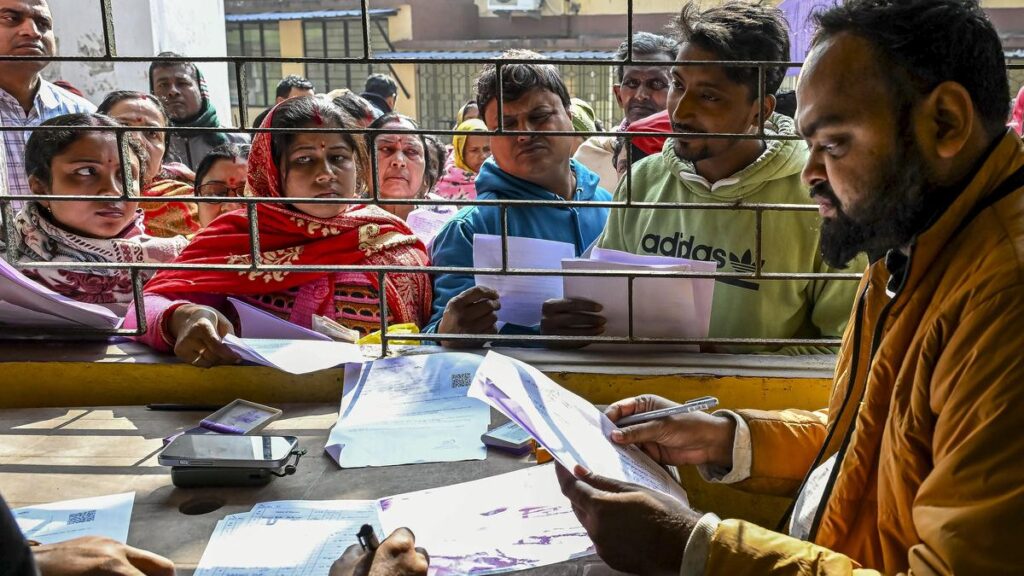
The legal battle reached the apex court after the West Bengal government argued that freezing the list on April 6—the final date for nominations in the first phase—would strip lakhs of citizens of their right to vote. Senior advocate Shyam Divan, representing the state, noted that meandering queues of voters were still seeking verification from judicial officers. However, the Court lauded the “miraculous” effort of over 700 judicial officers who have already adjudicated 59.15 lakh out of 60 lakh disputed claims.
The Bench, which also included Justices JoymalyaBagchi and Vipul M. Pancholi, invoked Article 142 of the Constitution to oversee this revision, citing a significant “trust deficit” between the state administration and the Election Commission. During the hearing, the Court also pulled up the West Bengal Chief Secretary for going “incommunicado” during an April 1 incident in Malda, where judicial officers were reportedly gheraoed by a mob—an act the CJI described as a “well-planned and deeply instigated” move rather than a spontaneous outburst.
As the freeze takes effect, approximately 27 lakh voters whose claims were rejected during the adjudication process will be unable to participate in the upcoming polls. The Election Commission is set to move forward with the finalized list, while the newly formed tribunals, headed by retired High Court judges, will continue to hear appeals for subsequent phases or future electoral cycles.

