


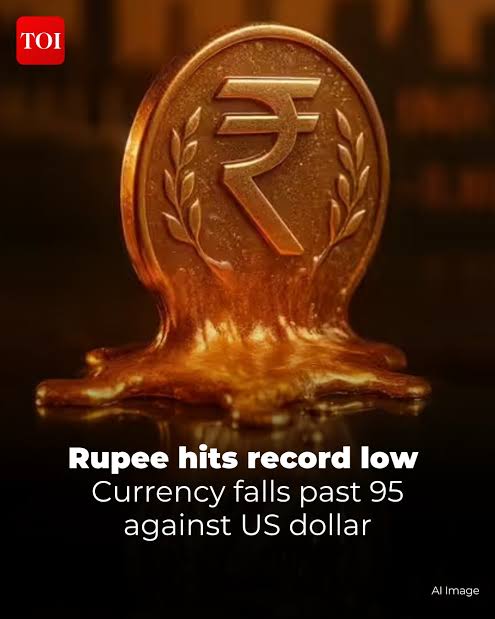
The Indian rupee hit a historic psychological low on Monday, March 30, 2026, breaching the ₹95 mark against the US dollar during intra-day trade.
The currency plummeted to an all-time low of 95.22 before a series of emergency interventions by the Reserve Bank of India (RBI) helped it recover slightly to close the session at 94.78.
This dramatic slide marks a cumulative 9.88% decline for the rupee in the 2026 fiscal year—its worst annual performance in 14 years.The primary driver of this “perfect storm” is the escalating conflict in West Asia, which began on February 28, 2026.
The war has severely disrupted global trade routes and pushed crude oil prices above $104 per barrel, forcing Indian oil companies to scramble for dollars to pay for imports.
Additionally, sustained selling by Foreign Institutional Investors (FIIs) in the Indian equity markets has led to a massive capital flight, further draining the country’s dollar reserves.
To stop the freefall, the RBI introduced a strict new mandate capping the overnight foreign currency positions that commercial banks can hold at $100 million (approx. ₹940 crore).
While this move initially sparked a sharp 128-paise recovery in the morning session, the gains were quickly erased by intense corporate and importer demand.
Finance Minister Nirmala Sitharaman addressed the issue in Parliament, asserting that the rupee is still “doing fine” compared to other emerging market currencies and that India’s economic fundamentals remain solid despite the external geopolitical shocks.

