


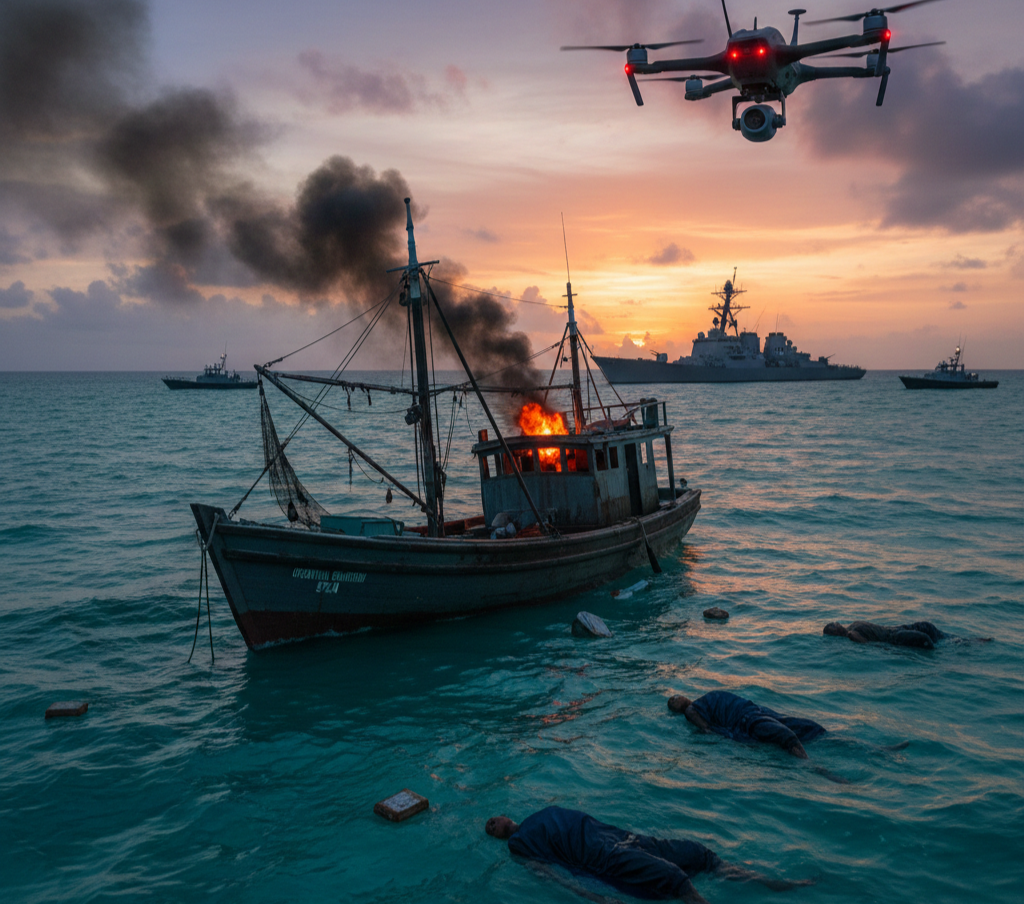
On February 14, 2026, the United States military carried out a deadly strike on a boat in the Caribbean Sea, resulting in the deaths of three people. This operation was conducted by the U.S. Southern Command (SOUTHCOM), which oversees military activities across Latin America and the Caribbean.
While the U.S. military has characterized these actions as “lethal kinetic strikes” aimed at disrupting drug trafficking, the government has notably not provided specific evidence to link the individuals killed in this latest incident to any criminal activity. This lack of transparency has sparked significant international concern.
Human rights organizations and legal experts are increasingly vocal in their criticism, arguing that these maritime attacks amount to extrajudicial executions. They point out that even if the individuals on these vessels were involved in illegal trade, international law requires due process rather than immediate lethal force.
This latest event is part of a much broader and more aggressive military campaign that began in September 2025. Since that time, the U.S. has reportedly carried out 38 separate attacks on approximately 40 different vessels across the Caribbean and the eastern Pacific Ocean. These operations have led to a staggering death toll of at least 133 people.
The escalation of these strikes comes during a period of intense regional tension. The Trump administration is currently navigating complex relationships and humanitarian crises in nearby nations like Cuba and Venezuela. As the U.S. continues to use military force at sea under the banner of national security and drug interdiction, the international community is left questioning the legal and ethical boundaries of such a high-stakes strategy.

