


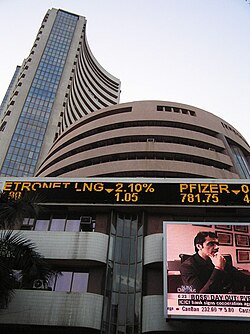
Dalal Street closed in the red on 11 June 2026 after a late session slide wiped out early optimism. Both Nifty and Sensex ended lower as traders reacted to escalating conflict in West Asia and stronger-than-expected US inflation numbers that pushed back hopes of a Fed rate cut.
The Nifty 50 closed at 23,161.60, down 53.35 points or 0.23%. The Sensex settled at 73,903.69, shedding 79.49 points or 0.11%.
After a strong start that took Nifty to an intraday high of 23,327.45 and Sensex to 74,394.34, profit booking kicked in post-noon. Nifty traded between 23,072.05 and 23,327.45, while Sensex ranged from 73,518.75 to 74,394.34. The indices opened at 23,104.40 and 73,615.99 respectively, but failed to sustain momentum as risk sentiment soured in the afternoon.
Banks Hold Firm, Tech and Metals Under Pressure
Lenders were the lone bright spot in an otherwise weak session. ICICI Bank rallied 2.48% to ₹1,325.40, Kotak Mahindra Bank added 1.56% to ₹394.15, and Axis Bank gained 1.47% to ₹1,333.80. Traders linked the move to easing costs on foreign-currency deposits following a new concessional forex swap facility announced by the RBI earlier this week. The facility is seen as a buffer for banks with high external liabilities.
On the flip side, IT and metal stocks dragged the indices down. Infosys retreated 2.11% to ₹1,121.10, HCL Tech slipped 2.07% to ₹1,108.70, and TCS also ended in the red. The sell-off in tech was largely a spillover from weak Nasdaq futures and rising US bond yields.
Metals took a harder hit as rising crude prices raised concerns over input costs and margins. Hindalco dropped 3.47% to ₹1,039.30, while Tata Steel and JSW Steel also closed lower. The Nifty Metal index lost 1.7% for the day, making it the worst-performing sectoral index.
Crude Surge and FPI Outflows Sour Mood
The main trigger for today’s risk-off mood was a sharp escalation in the Iran conflict. The US launched fresh strikes on Iranian targets near the Strait of Hormuz, prompting retaliatory missile and drone attacks on American bases in Jordan, Kuwait, and Bahrain. The escalation has reignited fears of a broader regional conflict that could disrupt global oil supply routes.
Brent crude surged 1.1% to $94 per barrel, its highest level in over a month. For India, the world’s third-largest oil importer, the spike adds to inflationary pressures and widens the current account deficit risk. Every $10 rise in crude is estimated to add 40-50 bps to CPI inflation.
That oil shock came right after May US CPI data showed the fastest rise in three years, largely driven by energy and services. The print has fueled bets that the Federal Reserve will keep interest rates higher for longer, potentially into 2027. Higher US rates typically make emerging markets like India less attractive for foreign portfolio investors.
And the data backs that up. FPIs offloaded ₹2,125 crore of Indian shares on Wednesday, marking the ninth straight session of outflows. Total FPI selling this year has crossed $30.4 billion. FIIs sold ₹4,566.03 crore on Tuesday alone, with domestic institutions unable to fully absorb the selling pressure.
Gift Nifty Hints at Weak Start, Charts Turn Cautious
Gift Nifty was trading at 23,069 ahead of the open, pointing to a gap-down start below Wednesday’s close of 23,214.95. Technicals aren’t helping either. Nifty formed a gravestone doji-like pattern near the highs, indicating rejection and indecision at higher levels.
Immediate support sits at 23,000–23,050, a level that has held twice in the last two weeks. A break below could open the door to 22,800. On the upside, resistance is placed at 23,450–23,500. Only a decisive close above that zone would revive bullish momentum.
For Sensex, 74,300 is the key resistance to watch. A break above could take it to 74,600 and then 75,000. Conversely, a slip below 73,600 risks a test of 73,500 and potentially 73,000. Analysts say the market is likely to remain range-bound until there’s clarity on the Iran situation and the Fed’s next move.
Broader Market Under Pressure, Volatility Creeps Up
Market breadth was weak across the board. Of 4,369 stocks traded on BSE, 2,740 declined versus 1,475 advances. Only 154 stocks hit the upper circuit, while 234 hit the lower circuit, showing a clear tilt toward selling.
Mid and smallcaps felt the heat more than the largecaps. Nifty Midcap 100 and Smallcap 100 both fell over 1%, underperforming the benchmark indices. The broader market weakness suggests that risk appetite is fading, with traders moving to safer, liquid names.
India VIX, the fear gauge, inched up to 15.63 from 15.21, reflecting cautious sentiment ahead of key geopolitical developments. A sustained rise above 16 could trigger more hedging and short-covering in the derivatives segment.
Corporate Buzz: Zee, Lenskart in Focus
Stock-specific action kept traders busy even as the broader market stayed soft. Zee Entertainment said it plans to raise up to ₹2,300 crore through a mix of equity and debt instruments. The announcement lifted the stock briefly before it closed flat.
In the startup space, an ADIA unit is looking to sell a 2.3% stake in eyewear retailer Lenskart via a block deal worth about ₹1,944 crore. The deal signals continued investor interest in India’s D2C segment despite the broader market volatility.
In the energy space, ONGC opened at ₹259 and closed at ₹257.25, down 0.68%, tracking the move in crude. Bharat Electronics slipped 1.11% to ₹403.80 after opening at ₹407.35, with volumes crossing 2.38 million shares.
Geopolitical Backdrop: War Enters Fourth Month
The Iran conflict, now in its fourth month, remains the dominant overhang for global markets. Analysts warn that unless foreign outflows reverse and pressure from oil, fertiliser, and gold imports eases, Indian benchmarks will struggle to rally sustainably.
Domestic flows are already showing signs of fatigue. Equity mutual funds saw their lowest inflows in a year in May, while gold ETFs recorded their first outflows in 12 months. Retail investors, who had been a key support in 2024 and early 2025, appear to be taking a breather.
With crude above $94 and the Strait of Hormuz back in focus, India’s macro risks are back on the radar. The rupee, which held steady around 83.40 against the dollar, could come under pressure if oil stays elevated and FPI outflows persist.
What’s Next for Markets
Markets are likely to stay volatile and range-bound unless there’s a de-escalation in West Asia or a dovish pivot from the Fed. For now, traders are playing it defensive, rotating into banks and watching oil prices like a hawk.
The next 48 hours will be crucial to see if bulls can defend the 23,000 level on Nifty or if bears take control. A break below could trigger a fresh wave of selling, while a bounce would need a positive surprise on the geopolitical front.

