


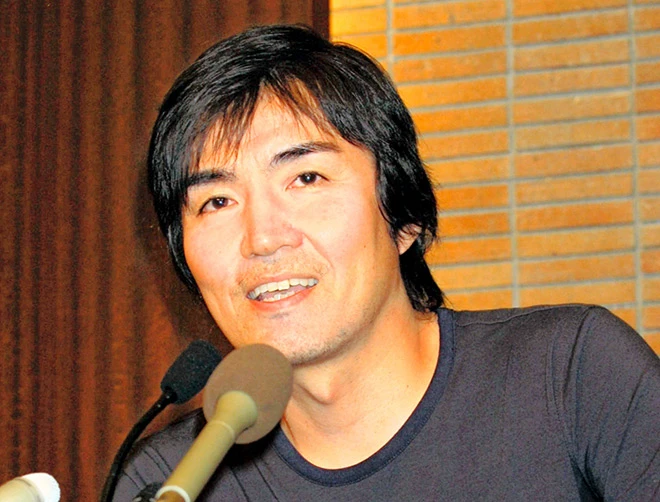
Known for his tight mysteries and satisfying emotional payoffs, Keigo Higashino, a Japanese crime fiction writer has passed away. A prolific writer who penned over 106 novels, he was 68.
He was an electrical engineer by profession. He dabbled in writing during his off hours.
Small wonder, his works stood out for reverse engineering whodunits. He approached plotting with the same rigor he might apply to assembling and dissembling.
He would make sure each component met it’s match. There were no loose ends like unsightly wires dangling about.
One was pleasantly surprised going through a Higashino book. The surprise stemmed from a heart beating within.
His works contained multitudes which made him formidable. His debut, After School won the Edogawa Rampo prize in 1985.
He was just 27 and quit his engineering job the following year.
Then he moved to Tokyo and never looked back. Famously reclusive, he refused interviews and photographs.
He knew he was famous for his books. He had often said that he had no desire to be recognised on the street.
Higashino’s works were brain teasers. It was one of the reasons why they were so much acceptable to the thinking man
Devising an unsolvable problem, or solving it, posits Higashino in Devotion of Suspect X. The hardest thing is to recognise the moral ambiguity that underpins life characterised his works.
As for motive of a criminal act, he set out a variety in his detective fiction. There are things lacking sanction of the society one can do for love or hate, out of guilt, shame, vengeance or sacrifice
This is a time when thrillers replace emotional depth. It was his exploration beyond whodunits that made Higashino, a global phenomenon.
His most durable creation was physicist-detective Manabu Yukawa ( Detective Galileo) and homicide detective embodied different facets of their creator
Yukawa, who began as a narrative device to justify
problem-solving on police cases was modelled on Doraemon, the problem solving robot cat. It was a charmingly self depreciating origin for a character who would be identified with cold, cerebral deduction.
On the other hand, Kaga was a study in contrast walking the aging streets of Tokyo. He solved murders among shop keepers and factory workers.
Higashino’s place is cemented in the hall of fame of Japanese literature. His 1998 novel Himitsu (Naoko) won Mystery Writers of Japan Award.
After five nominations, Yogisha X no Kenshin ( The Devotion of Suspect X) finally fetched him Naoki prize in 2006. It is Japan’s most prestigious literary award.
Two years later, the English translation would earn him a global literary name. Higoshini has put Japanese literary fiction on the global map.
The moral ambiguity.of his works lay in its plot twist. His solutions were elegant.
But his works will stand out by his trust on his readers to grapple with ambiguity and ask difficult questions. This technique found him avid audiences cutting across national boundaries

