


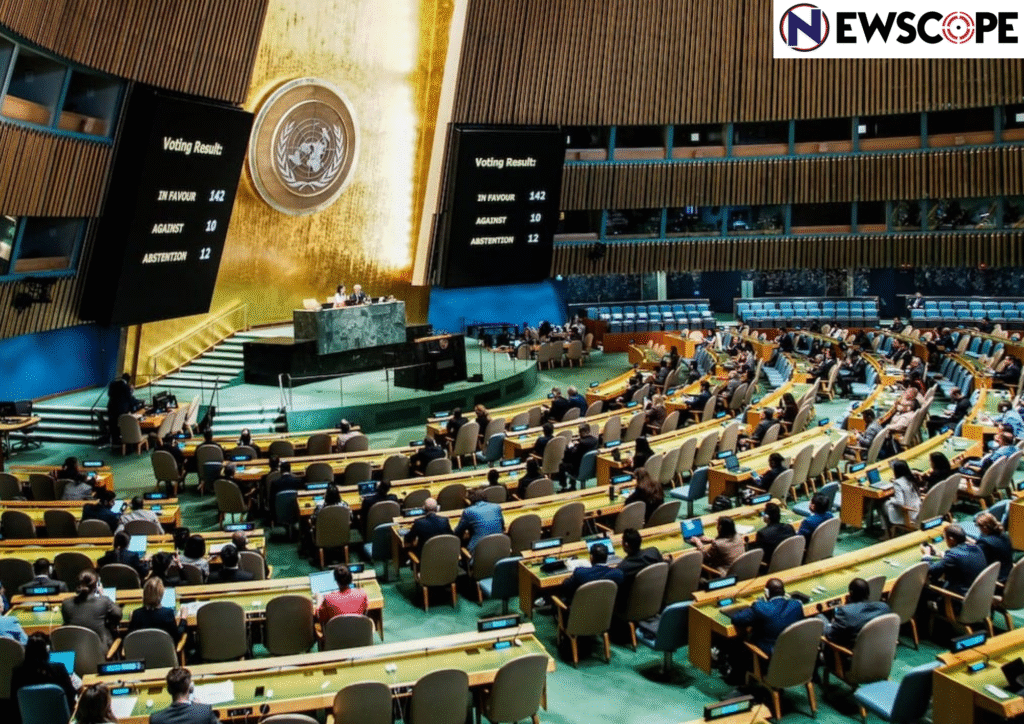
Unity prevailed in the General Assembly hall in the United Nations this week in a rare feeling. In the tallying of the votes, unanimous support of a resolution that advocated a Palestinian state was recorded in 142 countries. It was only opposed by 10 countries and 12 countries abstained. Among the countries who voted in favour was India, as had always been its tradition on peace in the Middle East.
The document is not a mere piece of paper but the resolution is called New York Declaration. It bears the burden of the frustration of the world that took decades of bloodshed and wars of unfulfilled promises. France and Saudi Arabia, which drafted it in July, chart a path to peace: silence the guns in Gaza, free the hostages and transfer the power to the Palestinian Authority, and the UN would help to keep the people safe. It demands the termination of forced displacement, settlement growth, and land grabbing. And in its very core, it requires the realization of what Palestinians have always craved of their very own sovereign and independent state.
To the Palestinian party, the vote was a lifeboat. Their UN ambassador, Riyad Mansour, remarked it indicated the desire of the world to open the door of the possibility of peace. His message bore the heavy burden of generations of people who have lived under occupation, displaced and at war. This international outburst of sympathy to many Palestinians was not mere diplomacy, it was a reminder that they are not being ignored.
Israel however responded with defiance. Several hours before the vote, the Prime Minister, Benjamin Netanyahu, announced, There will be no Palestinian state. The UN envoy of Israel, Danny Danon, dismissed the entire debate saying it has been all theatre and the only winner would be Hamas. This anger was shared by the United States which labeled the resolution as a misguided publicity stunt and a hamas gift. To Israel and its immediate ally, the UN vote was a mere indication that most people of the world do not comprehend their anxieties of security.
India’s vote, though, stood out. Throughout the years, New Delhi has managed to strike a delicate balance in its friendships both in the region and having close relations with Israel and also defending the rights of the Palestinians. In vote in favor of the resolution, India further emphasized its view that only dialogue and acknowledgement of the right of people of both sides to lead a dignified existence will bring real peace.
And then there was China. Already this month, Beijing had already indicated that it was in favor of the declaration, terming two state solution the only viable way to go. However, China remained silent when the votes were cast. It did not make any great new declaration, merely state editors in its media encouraging the world to transform the resolution into a reality. Others believe that this is how China is also playing safe, extending a helping hand to Israel but not making much noise.
The very resolution does not make things change overnight. It fails to prevent the dropping of the bombs in Gaza and the Israeli town fear. Nonetheless, it has a symbolic meaning. It reveals that even if there is deep division, most of the nations of the world desire the bloodshed to end, and even think that peace has to be based on the two states, which are to coexist. To the millions of the common people who are caught in the crossfire, that vision can still be as far away as ever. But the UN vote has at least given them a wake up call that they have not lost hope, and the world has its eyes on them.

