


India has stepped up humanitarian assistance to Nepal after devastating flash floods struck the Nepal-Tibet border region, causing heavy loss of life and widespread destruction. The disaster has left hundreds of people missing and damaged roads, bridges, homes and other critical infrastructure, making rescue operations extremely challenging.
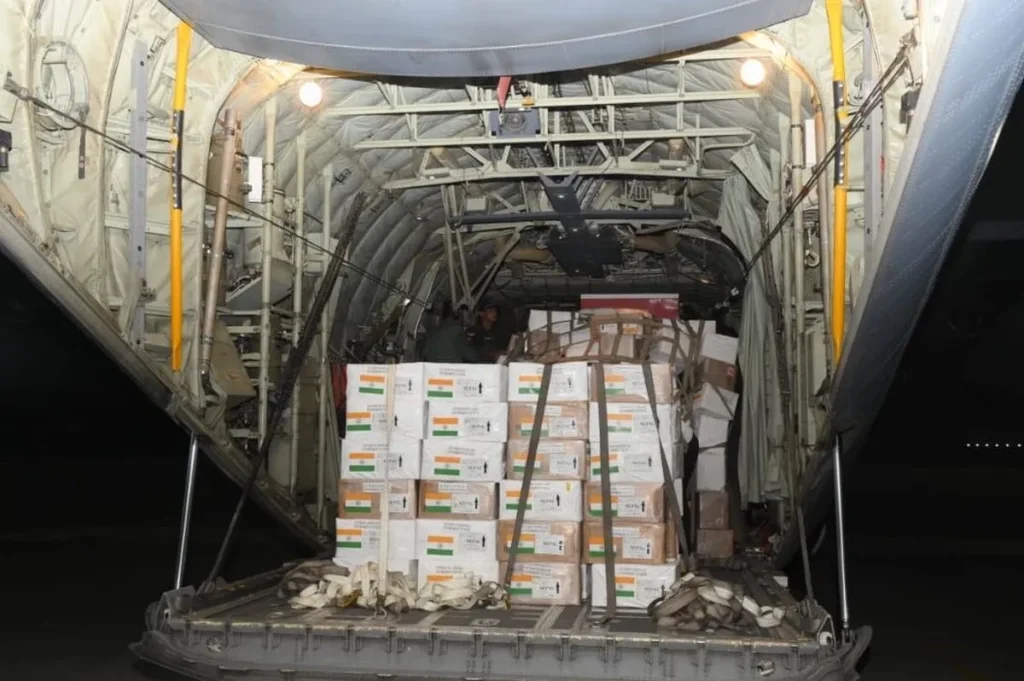
Responding quickly to the crisis, India dispatched emergency relief material and essential medicines to Nepal. The first consignment of 10 tonnes of Humanitarian Assistance and Disaster Relief (HADR) supplies was transported by an Indian Air Force C-130J aircraft to Kathmandu. The supplies included temporary shelters, blankets, hygiene kits, solar lamps and medicines intended to support people affected by the floods.
Prime Minister Narendra Modi spoke with Nepal Prime Minister Balendra Shah and expressed condolences over the loss of lives. Modi assured Nepal that India was ready to provide all possible humanitarian assistance and said that Indian teams were coordinating with Nepalese authorities on rescue and relief operations.
External Affairs Minister S. Jaishankar also confirmed India’s support, saying that New Delhi would continue to stand with Nepal during the crisis. The first shipment reached Kathmandu on Thursday, with further assistance being mobilised as Nepal continues its rescue and recovery efforts.
India’s support was expanded further on Thursday with the dispatch of a second relief flight carrying 37.5 tonnes of humanitarian assistance, medicines and food packets. The additional supplies are expected to strengthen Nepal’s emergency response at a time when rescue teams are working under difficult weather and terrain conditions.
The floods have caused a humanitarian emergency in several areas. According to reports on Thursday, at least 165 people had died in Nepal, while nearly 1,500 people remained missing across Nepal and Tibet. Helicopters have been involved in delivering emergency supplies and evacuating survivors from affected areas.
The disaster has also affected foreign nationals, including Indians who were travelling through the region. The difficult terrain, damaged roads and disrupted communication networks have complicated efforts to determine the exact number of people missing and to reach isolated communities.
India’s rapid response reflects the close ties between the two neighbouring countries and its longstanding role in providing disaster assistance in the region. Beyond diplomatic relations, the emergency response has focused on providing immediate necessities to people facing the consequences of a devastating natural disaster.
As Nepal continues search, rescue and relief operations, India has assured Kathmandu that additional assistance will be provided as required. The ongoing cooperation between the two countries is expected to remain important in the coming days as authorities shift from immediate rescue operations towards relief, rehabilitation and reconstruction.
For Nepal, the immediate priority remains finding those still missing, treating survivors and restoring damaged infrastructure. For India, the focus is on ensuring that humanitarian supplies reach affected communities and supporting Nepal’s efforts during one of its most severe recent natural disasters.

