


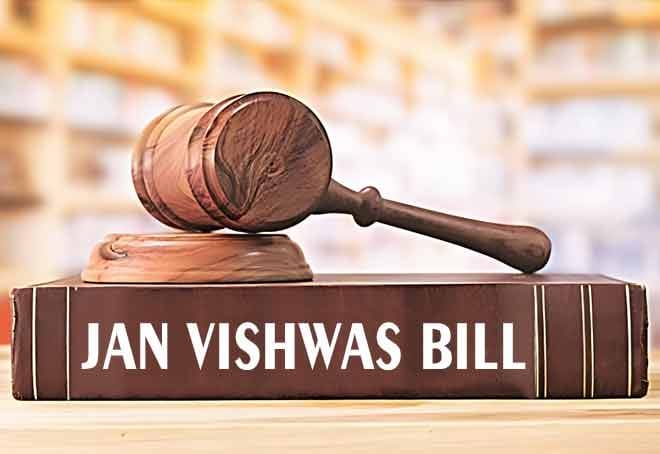
In a significant step toward reforming India’s legal and regulatory framework, Parliament has passed the Jan Vishwas (Amendment of Provisions) Bill, 2026, which seeks to amend as many as 784 provisions across 79 Central Acts. The move is being seen as one of the most extensive efforts to decriminalise minor offences and promote ease of doing business in the country.According to government sources, the Bill decriminalises 717 provisions by removing imprisonment clauses for minor and technical violations and replacing them with monetary penalties or administrative actions. The remaining provisions have been rationalised to ensure better compliance and reduce regulatory burden on individuals and businesses.
The legislation spans multiple sectors, including commerce, environment, transport, and labour, and involves reforms across 23 ministries. Officials said the objective is to shift from a punitive legal framework to a trust-based governance model, where compliance is encouraged through facilitation rather than fear of prosecution.Union ministers highlighted that the reform will help reduce the burden on courts by eliminating criminal cases related to minor infractions. They also emphasised that the changes will make India more investor-friendly by simplifying regulatory processes and reducing legal risks for businesses.The Bill provides for the appointment of adjudicating officers who will have the authority to impose penalties, thereby speeding up dispute resolution without the need for prolonged court proceedings. It also promotes digitisation and simplification of compliance mechanisms.
However, the Bill has drawn criticism from some quarters, with concerns raised over the potential dilution of accountability. Critics argue that excessive decriminalisation, particularly in sectors like environment and public safety, may weaken enforcement and allow violations to go unchecked.Despite the concerns, the government has defended the move as a necessary reform to modernise India’s legal system and remove outdated provisions, many of which date back to the colonial era.The Jan Vishwas Bill builds on earlier reforms initiated in 2023, when a similar law decriminalised 183 provisions. With the latest amendments, the government aims to further strengthen a compliance-friendly environment while ensuring that serious offences continue to attract strict penalties.The passage of the Bill marks a major shift in India’s approach to governance, focusing on trust, efficiency, and ease of living for citizens as well as businesses.

