


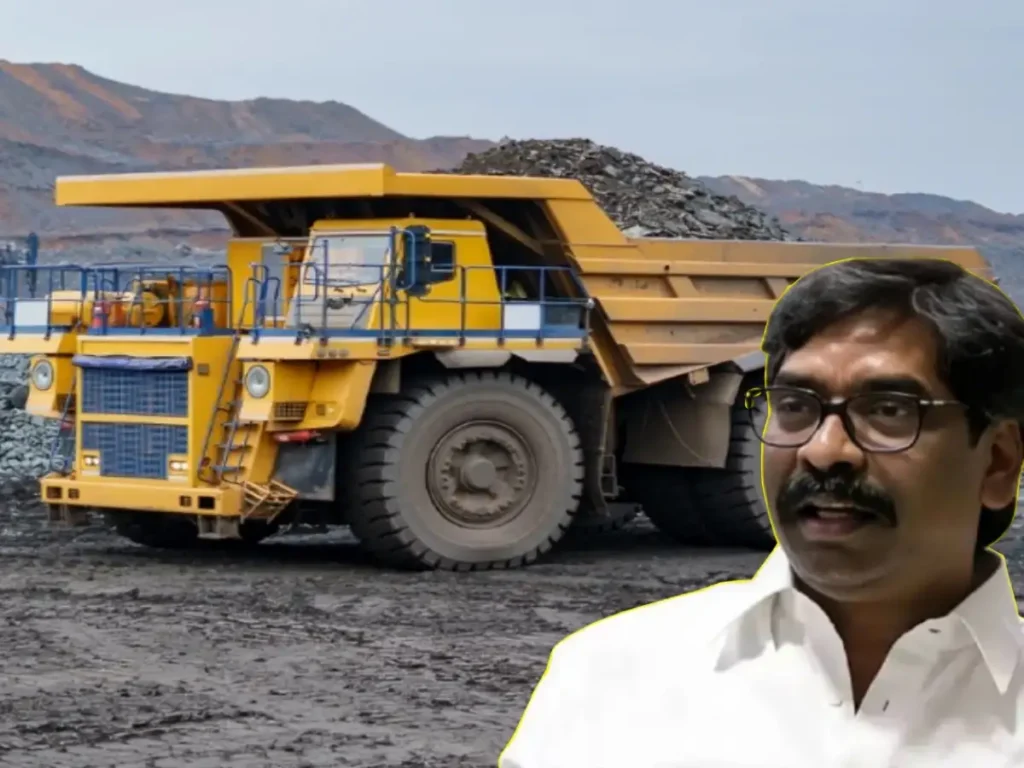
Jharkhand Chief Minister Hemant Soren has written to Prime Minister Narendra Modi urging the Centre to reconsider the Mines and Minerals (Development and Regulation) Amendment Bill, 2026. Soren has raised concerns that the proposed legislation could affect the state’s financial resources and reduce its authority over mineral-rich land.
Jharkhand, one of India’s major mineral-producing states, depends heavily on mining-related revenue. In his letter, Soren argued that any changes affecting the state’s ability to collect revenue from mineral-bearing land could have serious consequences for its finances and development programmes. According to Reuters, the state estimates that its Mineral Bearing Land Cess could generate around ₹7,110 crore annually.
The controversy centres on provisions in the new legislation that seek to restrict states from independently imposing taxes or charges connected with mineral rights and mineral-bearing lands. The Centre has maintained that the objective is to create a uniform framework for mineral taxation and pricing across the country. However, Jharkhand and several other states have criticised the move, saying it could weaken their financial and constitutional powers.
Soren’s objection is not limited to the question of revenue. He has also framed the issue as one of federalism and the rights of mineral-producing states. Jharkhand has long argued that although its natural resources contribute significantly to the national economy, local communities must also receive a fair share of the benefits.
The Chief Minister has repeatedly stressed the need for responsible mining and greater value addition within Jharkhand. Earlier this year, he said the state should move beyond being merely a supplier of raw minerals and focus on processing, manufacturing, employment generation and sustainable industrial development.
The issue has now developed into a wider political confrontation between the Centre and the Jharkhand government. Soren has warned that his government could launch a statewide movement if the legislation is not withdrawn. The Jharkhand Mukti Morcha has also threatened stronger forms of protest, arguing that the Bill could undermine the state’s mineral rights and economic interests.
The Centre, however, maintains that the legislation is intended to establish consistency in the taxation of minerals and does not seek to undermine state autonomy. The disagreement therefore reflects a larger debate over how India’s mineral wealth should be governed and how the financial benefits from natural resources should be shared between the Union and states.
For Jharkhand, the stakes are particularly high. The state’s economy has historically been closely linked to coal, iron ore and other minerals. Any major change in mining-related revenue could influence government spending on infrastructure, welfare, education and development.
Soren’s letter to the Prime Minister has therefore put the Mines and Minerals Bill at the centre of a fresh Centre-state dispute. With Jharkhand threatening further protests, the coming discussions between the Union government and mineral-rich states are likely to determine whether a compromise can be reached while balancing national policy with states’ financial and constitutional interests.

