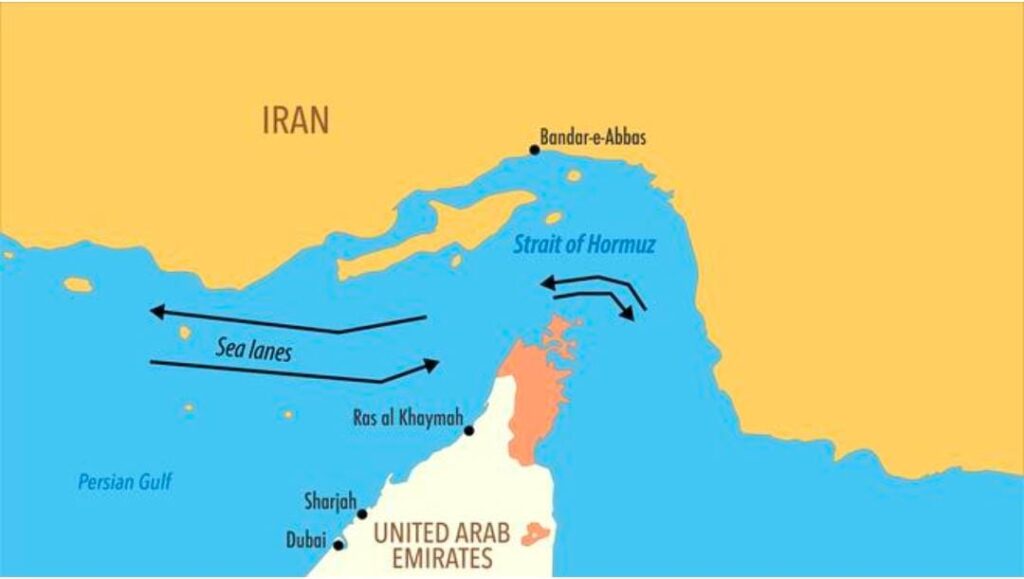
The global energy supply chain has been plunged into unprecedented chaos following Tehran’s strategic decision to effectively choke off the Strait of Hormuz. This narrow but vital shipping lane, which facilitates the passage of approximately 20% of the world’s total oil and Liquefied Natural Gas (LNG), has become the center of a high-stakes geopolitical standoff. As Iran transitions from regional skirmishes to a virtual blockade of the waterway, global oil and gas prices have entered a vertical climb, sparking fears of a worldwide inflationary spiral and industrial paralysis.
The Diplomacy of Exclusion
In a move that many analysts describe as the “weaponization of trade,” Iranian Foreign Minister Seyed Abbas Araghchi confirmed via State TV that the Strait is no longer an open corridor. Instead, Tehran has pivoted to a policy of selective access, granting transit rights only to a handful of “friendly nations.” While the majority of global commercial shipping remains paralyzed, India, China, Russia, Iraq, and Pakistan have been granted a precarious “pass” to continue operations. This selective blockade is being viewed by the international community as a calculated tool of diplomacy, designed to shore up Eastern alliances while exerting maximum pressure on Western economies.
India’s Diplomatic Tightrope
While India finds itself in the rare position of having secured passage, the mood in New Delhi is far from celebratory. The Indian government remains in a state of high alert, recognizing that a “partial” opening of the Strait is a fragile solution to a systemic problem. West Asia has historically been the primary artery for India’s energy procurement; any prolonged disruption—even if India is technically exempt—threatens the broader stability of global markets upon which the Indian economy relies.
New Delhi’s diplomatic efforts have intensified over the last fortnight, focused squarely on de-escalation. There is a deep-seated concern within the Ministry of External Affairs that the continuing blockade could have catastrophic ramifications for fuel and fertilizer security. For an agrarian economy like India’s, a shortage of fertilizers or a spike in diesel prices could trigger a domestic food security crisis.
A Looming Global Confrontation
The stakes have been further raised by a sharp ultimatum from Washington. US President Donald Trump has warned Tehran of “severe consequences” if the waterway is not fully reopened to all international shipping immediately. This escalating rhetoric between the US and Iran places India in an increasingly precarious position. As New Delhi advocates for the “unimpeded flow of energy,” it must balance its strategic partnership with the West against its immediate need for Iranian cooperation to keep its tankers moving. With the risk of a broader military confrontation looming, the world watches the Strait of Hormuz, waiting to see if diplomacy can reopen the gates before the global economy fractures beyond repair.
Energy Markets Reeling as Iran Weaponizes Strait of Hormuz; India Among Few Exempted
Energy Markets Reeling as Iran Weaponizes Strait of Hormuz; India Among Few Exempted