


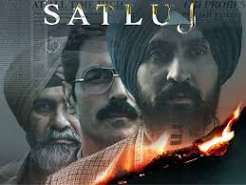
The film Sutlaj has disappeared from an Indian streaming platform within days of its release. This is far more than the fate of a single film as it raises a larger question that democratic societies cannot afford to ignore.
Satluj ( originally titled Punjab ’95) is a 2026 biographical drama film directed by Honey Trehan and starting Diljit Dosanjh. It explores the life of human rights activist, Jaswant Singh Kalra who investigated extra-judicial killings and enforced disappearances during the 1990s Punjab insurgency.
It was premiered on early July but was removed from the Indian catalogue 48 hours later. Government security concerns and regulatory disputes were cited as reasons of its removal.
Every nation has painful chapters in its history. India’s battle against militancy in Punjab remains one of them.
The insurgency covered thousands of lives including civilians, security personnel and political leaders. It also left behind allegations of excesses against state agencies, many of which were examined by courts, commissions and investigating bodies.
A mature democracy should possess the confidence to confront realities, rather than reducing history to a single officially sanctioned narrative. The situation is ironical.
India has gradually moved towards a liberal eco-system for digital content. In this backdrop, screening platforms were expected to widen the space for creative expression.
It was thought to be beyond the traditional censorship model applicable to theatrical films. Yet Sutluj has been swiftly withdrawn.
The distinction between certification and post release regulation remains substantial for a film maker. The disappearance of Satluj also highlights the need for transparency.
Regulatory decisions command greater public confidence when the government clearly explains the legal basis for their actions. On the other hand, silence fuels speculation, political polarisation and charges of arbitrary censorship.
The film Aandhi is a case in point. It earned the censor’s wrath for depicting a woman prime minister in what appeared to be in a poor light to the then powers that be. It became a runaway b
hit after the lifting of the Emergenc
Decisions shrouded in ambiguity benefit neither artists nor audience. Films dealing with historical or sensitive political subjects already face considerable financial and legal risks.
Democracies routinely impose reasonable restrictions. It relates to incitement, national security and public order.
One wonders whether such restrictions were. needed to be imposed on Sutlaj. It may backfire resulting in producers, distributors and streaming platforms concluding that certain topics are not worth pursuing.
This is more damaging than formal censorship. For it narrows public discourse before any regulator intervenes.
Restrictions derive legitimacy only when they are exercised through transparent procedure. Otherwise, the boundary between lawful regulation and suppression of uncomfortable narratives become increasingly difficult to discern.
Cinema, like literature and journalism often challenge settled assumptions. This can be uncomfortable.
.
But lack of comfort cannot alone become the standard for restricting artistic expression.
The controversy around Sutlaj should trigger a broader institutional conversation.
A democracy confident in its constitutional foundations need not fear difficult stories. It should ensure when such stories are questioned the reasons are public.
The questioning process should be fair and principles consistently applied. Only then can the regulation process command respect.

