


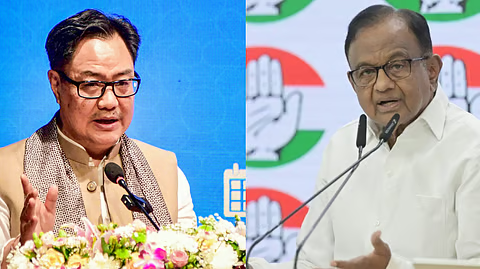
A sharp political exchange has erupted between Congress leader and former Union Home Minister P. Chidambaram and Union Parliamentary Affairs Minister Kiren Rijiju over the controversial term “dimagi Naxal” used by Prime Minister Narendra Modi during his Independence Day address.
Addressing the nation from the Red Fort on August 15, Prime Minister Modi said India had succeeded in eliminating armed Naxalism from the forests but warned that people with a “Naxal mindset” could still pose a threat. He called for such “dimagi Naxals” and their supporters to be identified and isolated.
The remark quickly became a political flashpoint. Chidambaram, reacting to the Prime Minister’s comments, posted on X, “I am proud to be a dimagi Naxal.” His statement was seen as a direct political challenge to the government’s use of the term and triggered a strong response from the BJP.
Rijiju stepped in to clarify that the Prime Minister had not described Opposition leaders as “dimagi Naxals”. In a social media post, he said the term referred to people who support Maoists and reject the Constitution, those who support separatism and Article 370, and those who advocate separating the Northeast from the rest of India.
Calling Chidambaram’s response “unfortunate” and “highly damaging,” Rijiju argued that the former Home Minister had misunderstood the Prime Minister’s remarks. The exchange, however, did not end there. Several BJP leaders criticised Chidambaram and linked his statement to the Congress-led UPA government’s record in dealing with Naxal violence.
Congress leaders, on the other hand, questioned the government’s use of labels such as “urban Naxal” and “dimagi Naxal”. For the Opposition, the controversy is not simply about Naxalism but also about how political disagreement and criticism are described in public debate.
The dispute has also brought the word “dimagi Naxal” into everyday political conversation. What began as a phrase in an Independence Day speech has quickly moved to social media, where politicians and supporters from both sides are debating its meaning.
At the heart of the controversy is a larger question: where should the line be drawn between genuine national security concerns and legitimate political disagreement? While the government says its warning is aimed at people who actively support violence, separatism or Maoist ideology, the Opposition fears that such labels could be used to silence criticism.
The Chidambaram-Rijiju exchange therefore reflects more than a personal political argument. It highlights the wider ideological divide between the BJP and Congress and shows how a single phrase can become the centre of a much bigger national debate.
For ordinary citizens, the political sparring may seem distant, but the issue touches something important—the freedom to disagree while remaining committed to the country. As the debate continues, the challenge for political leaders will be to discuss national security seriously without turning every disagreement into another political battlefield.

