


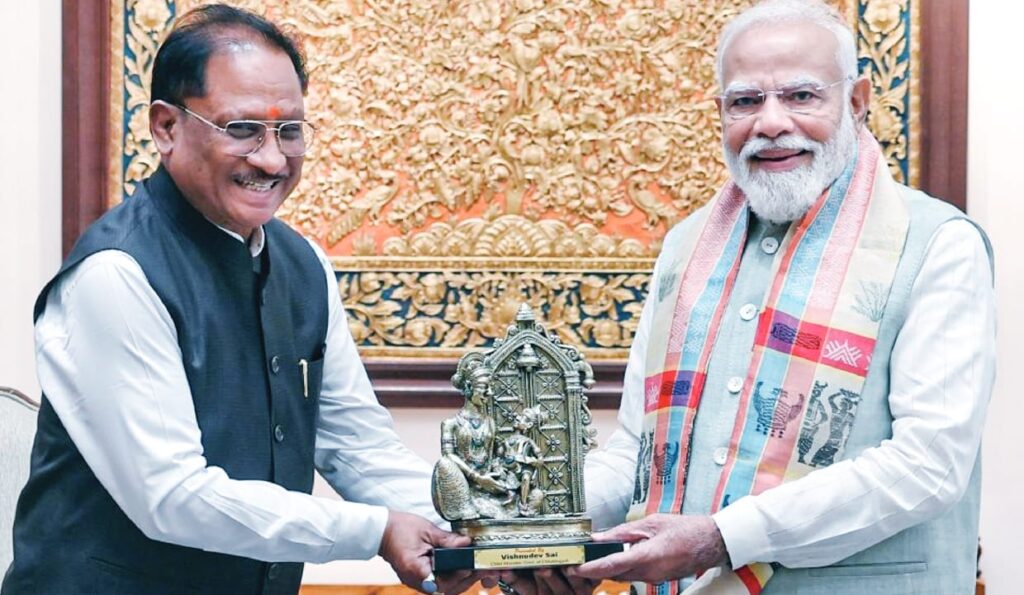
In a significant development, Vishnu Deo Sai informed Prime Minister Narendra Modi that Maoism has been effectively eliminated from Chhattisgarh, marking what the state government describes as a historic milestone in India’s fight against Left-Wing Extremism.During a high-level meeting in New Delhi, the Chief Minister stated that regions once considered Maoist strongholds, particularly the Bastar division, are now witnessing peace and stability after decades of insurgency. He attributed this achievement to sustained security operations, improved coordination between central and state forces, and successful surrender and rehabilitation policies.According to officials, hundreds of Maoist cadres have surrendered in recent months, while several top leaders have either been neutralised or pushed out of the region. Enhanced infrastructure development, including road connectivity, mobile networks, and administrative outreach, has also played a crucial role in weakening insurgent influence.
With the security situation under control, the state government has now shifted its focus towards rapid development. The Chief Minister presented a comprehensive roadmap titled “Bastar 2.0”, aimed at transforming the region into a hub of economic growth and opportunity. The plan prioritises infrastructure expansion, employment generation, tourism promotion, and welfare initiatives for tribal communities.Prime Minister Modi welcomed the progress and assured continued support from the Centre for Chhattisgarh’s development initiatives. The discussions also included strategies to ensure that extremism does not resurface and that the benefits of development reach grassroots levels.
The Chief Minister extended an invitation to the Prime Minister to visit Bastar in the coming months to inaugurate key projects under the new development vision.However, security experts caution that while Maoist activities have significantly declined, isolated elements may still persist. They emphasise that sustained vigilance and inclusive growth will be essential to maintain long-term peace.The announcement is being seen as a major boost to India’s internal security framework and could redefine the future of governance and development in previously conflict-affected regions.

