


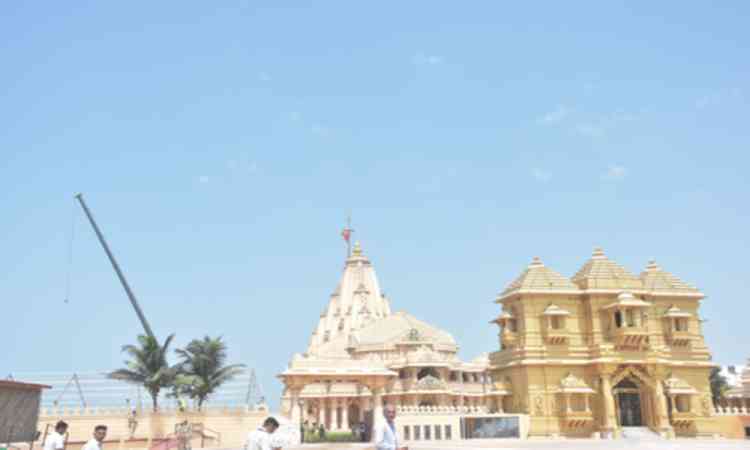
On May 11, 2026, the Indian Air Force’s (IAF) Surya Kiran Aerobatic Team performed a high-profile air show over the Somnath Temple in Gujarat to mark the “Somnath Amrut Mahotsav,” a celebration of the shrine’s 75th reconstruction anniversary. While Prime Minister Narendra Modi and thousands of devotees cheered as Hawk Mk-132 jets painted the sky in tricolor smoke, a group of military veterans raised significant concerns over the event’s nature. These critics argue that using frontline military assets for a religious celebration deviates from the secular traditions of the Indian Armed Forces, asserting that such displays should be reserved for constitutional ceremonies rather than sectarian events.
The controversy highlights a growing debate regarding the intersection of state-funded military prowess and religious symbolism. The Surya Kiran team, often called the “Ambassadors of the IAF,” executed precision maneuvers and “tricolor” flypasts directly above the historic Jyotirlinga. Additionally, a Chetak helicopter showered flower petals over the temple complex during the Kumbhabhishekrituals.
Veterans expressing dissent pointed out that the Indian military has historically maintained a strict distance from religious affiliations to uphold its professional and apolitical character. One retired officer noted that while the reconstruction of Somnath is a significant historical event, the deployment of the IAF transforms a religious milestone into a state-endorsed theological display. They argued that such acts could set a precedent where the military is expected to participate in various religious festivals across the country, potentially stretching resources and blurring the lines of the Constitution.
Supporters of the event, including government officials, countered that the show was a tribute to India’s cultural heritage and a demonstration of “Bhakti and Shakti” (Devotion and Power). They maintained that the Somnath Temple is a symbol of national resurgence, making the IAF’s participation a matter of national pride. Despite the spectacle’s popularity with the public, the “constitutional” nature of the involvement remains a point of contention among those who wore the uniform.

