


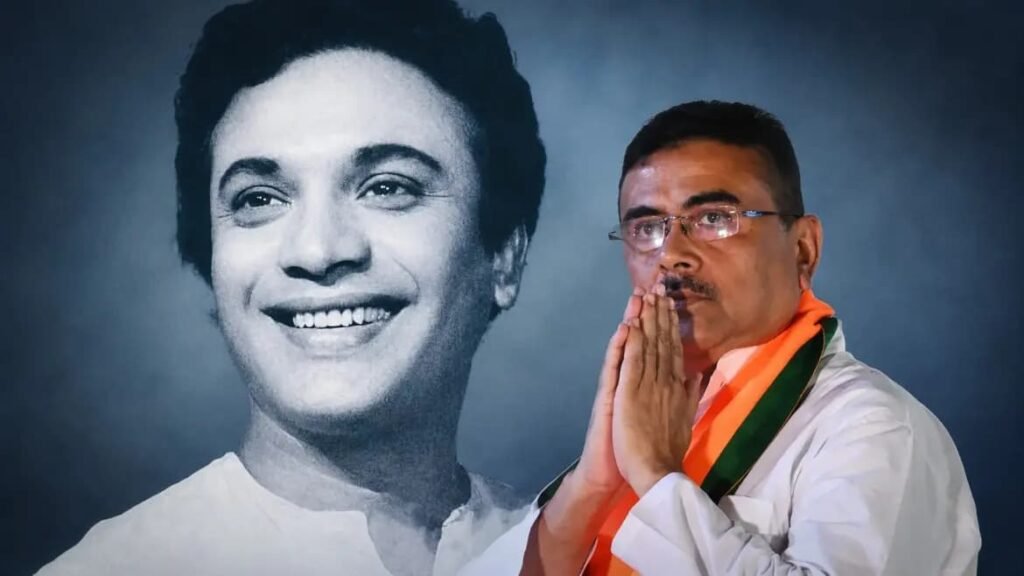
The centenary of Bengali cinema icon Uttam Kumar has become more than a celebration of his contribution to films. It has also turned into a political moment, with the Bharatiya Janata Party (BJP) using the actor’s enduring popularity to strengthen its cultural connection with West Bengal. Uttam Kumar, popularly known as the “Mahanayak”, remains one of the most respected figures in Bengali culture, nearly five decades after his death.
Born Arun Kumar Chattopadhyay on September 3, 1926, Uttam Kumar became the defining star of Bengali cinema. His partnership with Suchitra Sen, along with films such as Saptapadi, Nayak and Harano Sur, made him an inseparable part of Bengali popular culture. His influence went beyond entertainment, as generations of Bengalis grew up with his films and songs.
The BJP’s recent focus on Uttam Kumar has attracted attention because of the actor’s unique position in Bengali society. Prime Minister Narendra Modi paid tribute to Uttam Kumar during his Mann Ki Baat address and on the occasion of the actor’s birth centenary. Modi highlighted Kumar’s struggles, professional achievements and performance in Satyajit Ray’s Nayak.
The BJP-led state government also organised a special tribute programme near Uttam Kumar’s statue at Tollygunge. The event was attended by Chief Minister Suvendu Adhikari and several personalities from the Bengali film industry. These activities have led to accusations that the BJP is attempting to use Uttam Kumar’s cultural legacy for political outreach.
For the BJP, the strategy has a clear political significance. Bengal has a strong cultural and linguistic identity, and connecting with universally admired Bengali figures can help a national party present itself as more closely connected with the state’s traditions. Uttam Kumar’s popularity cuts across political and ideological boundaries, making his image particularly valuable in such an effort. The BJP’s recent references to him have therefore been viewed by political observers as part of a broader attempt to establish a cultural connect with Bengal.
However, the politicisation of a cultural icon also raises questions. Uttam Kumar belongs to the people of Bengal rather than to any particular political party. His films, performances and contribution to cinema existed independently of today’s political divisions. Turning his centenary into a political campaign risks reducing a complex cultural legacy to an electoral message.
At the same time, political leaders paying tribute to cultural personalities is not unusual. Governments across political parties have historically commemorated artists and national icons. The key issue is whether such tributes remain focused on preserving cultural heritage or become tools for political mobilisation.
Uttam Kumar’s legacy ultimately survives because of his cinema, not because of political endorsement. His films continue to be watched, his performances studied and his memory celebrated by audiences across generations. As Bengal marks his birth centenary, the debate over who can claim his legacy may continue. But for millions of Bengalis, the “Mahanayak” remains larger than politics—a symbol of Bengali cinema and cultural identity that belongs to everyone.

