


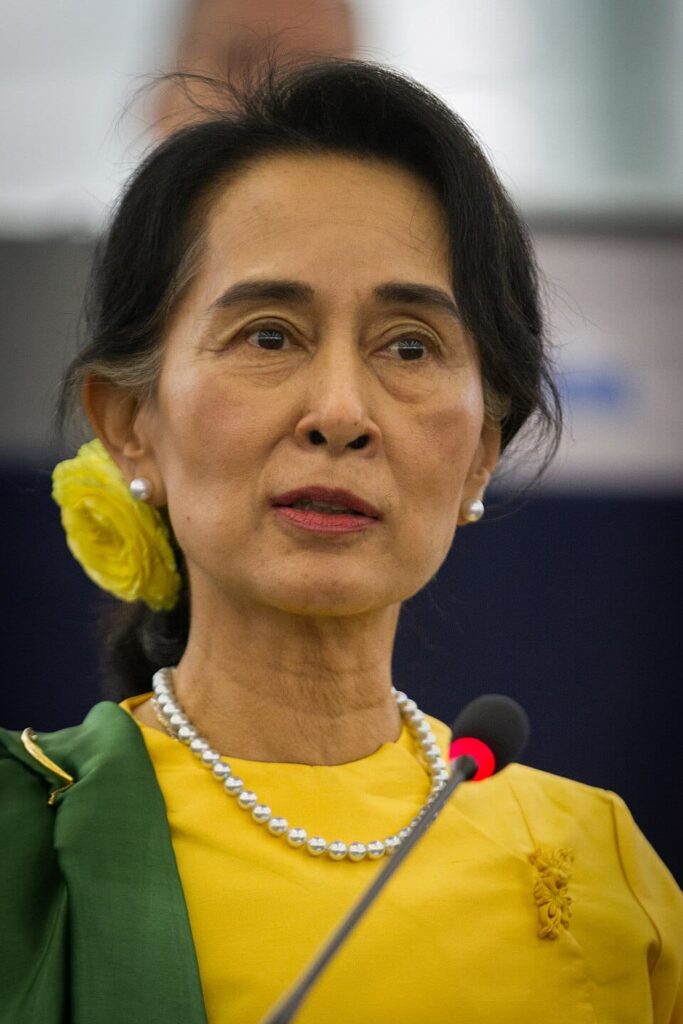
Aung San Suu Kyi has been in detention for two decades. But it has not diminished her political stature, it has only altered its firm. The Nobel Laureate was once the voice of moral resistance. Now she is a silent symbol in a country where silence itself has become a weapon.
The generals running the affairs in Myanmar have certainly erased her presence from the billboards and the broadcasts. But it is beyond them to remove her from the memory of millions of people to whom Suu Kyi continues to be a beacon of hope for the restoration of democracy.
There was a time when she was defiant but visible and reachable. Today Suu Kyi is cut off from lawyers, family and the public; her health is unknown and her fate is uncertain.
She only has herself for company. Her isolation mirrors the aridity of Myanmar’s political landscape.
The military had once flirted with controlled reform. Now it’s uncompromising rule is now reliant on fear, air power and a staged electoral theatre to make a tenuous claim of legitimacy.
A space for negotiation existed a decade ago. Now it has collapsed.
The young no longer gather for peaceful rallies. They have taken to the jungles and borderland being convinced that non-violence has come to a dead end.
But even in this scenario, Suu Kyi’s creed and name holds out hope. Now for her minus.
Her global halo was fractured post ho iner decision while in office of defending the state against the international charge of genocide of Rohingyas. No longer is she the unblemished icon of the ’90s.
But one has to acknowledge the fact that this charge has not cancelled her relevance. No other civilian figure can match her recognition and authority in today’s Myanmar splintered by ideology, ethnicity and armed struggle.
Aware of this, the generals keep her locked away. Her release will not end the war.
Yet no bridge can come up between the gun and the ballot which her continued disappearance ensures. Myanmar is witness to a grim stalemate in which a junta which will not yield and a resistance that will not compromise.
In this backdrop, Suu Kyi remains the sole individual who can anchor a transition from away from perpetual conflict. She has much more than a showcase presence.
She is eighty. After having lost years in imprisonment she may not return to active leadership.
But nations move on symbols. Suu Kyi’s shadow stretches across Myanmar’s political landscape; there is no one else to cast a silhoutte.

